2nd Jun '22
/
36 comments

Single Event Template for The Events Calendar in Bricks

Updated on 19 Sep 2024

The Events Calendar is one of the most popular event plugins for WordPress.

With The Events Calendar active, single event pages appear fine out of the box in Bricks.

However, in certain situations, you may want to customize the layout inside the Bricks editor and in this Pro tutorial, we share how this can be done.

Step 1

Go to Events → Settings → Display.

This is a BricksLabs Pro tutorial.

For full access login below or create your BricksLabs Pro account

Get access to all 610 Bricks code tutorials with BricksLabs Pro

Related Tutorials..

Pro
Non-empty events sorted by event date and other posts below in Bricks

Non-empty events sorted by event date and other posts below in Bricks

Updated on 15 Jan 2024 Consider a scenario where you are showing posts from multiple post types namely post, event and game in a single…
Categories:
Pro
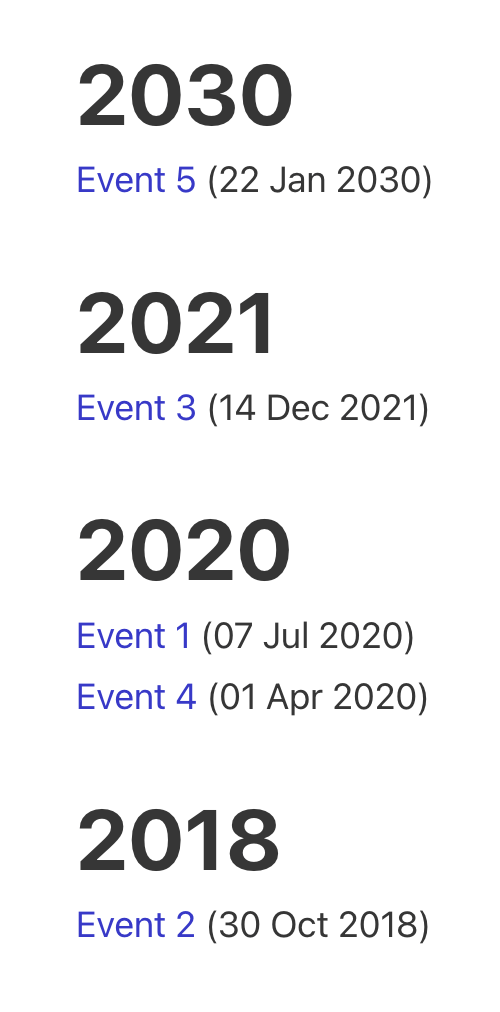
Events Grouped by Event Year

Events Grouped by Event Year

In this Pro tutorial, we share the PHP code for outputting past events grouped by the event year in descending order of the event year.…
Categories:
Tags:
Pro
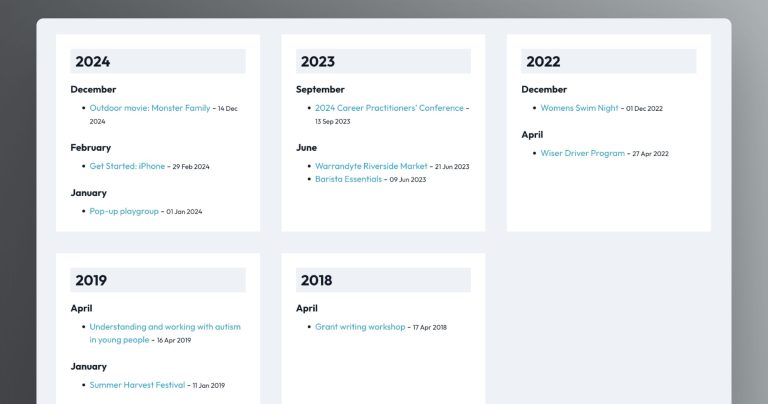
Events grouped by months within years based on event date custom field value

Events grouped by months within years based on event date custom field value

How to output events grouped by years and months using three nested query loops in Bricks.
Categories:
Pro
Modern Events Calendar in Bricks

Modern Events Calendar in Bricks

This Pro tutorial provides the steps for using Modern Events Calendar in Bricks. We shall set up the single event Bricks template with a combination…
How to Show Future Events in Bricks

How to Show Future Events in Bricks

One of the common requirements in WordPress is being able to filter the events (or could be posts of any post type) to only those…
Categories:
Pro
Upcoming Events Grouped by ‘Month Year’ in Bricks

Upcoming Events Grouped by ‘Month Year’ in Bricks

A custom query loop type for showing future events based on a date custom field using three nested query loops.